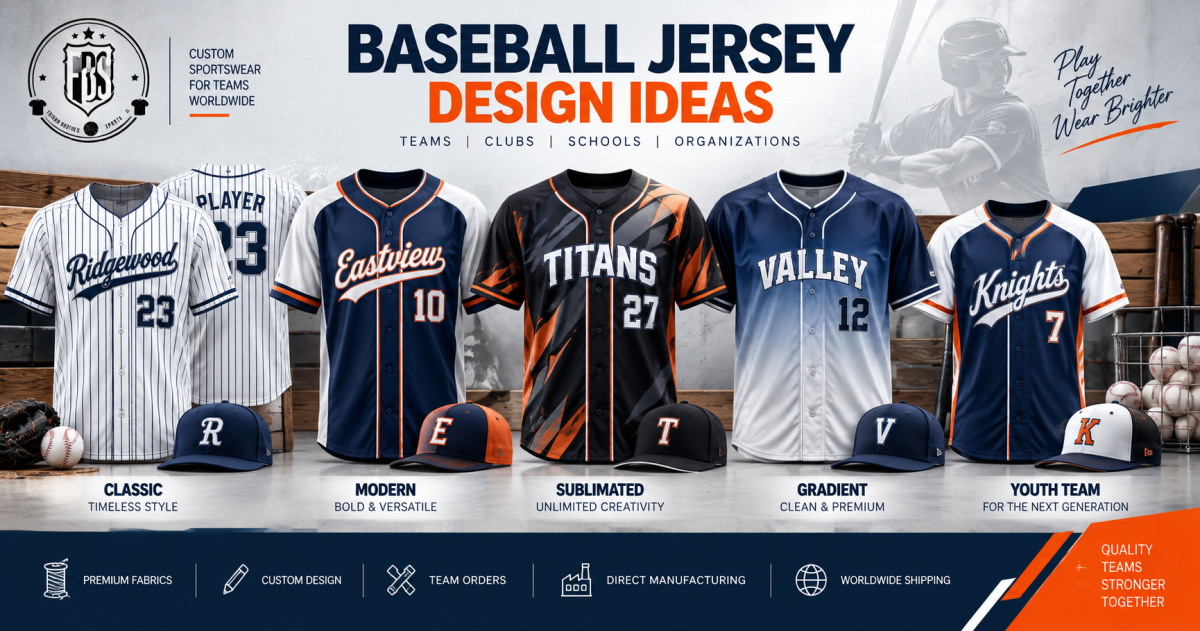
A great baseball jersey should do more than display a team name and player number. The right combination of colors, fonts, patterns, logos, and customization can give a team a recognizable identity while keeping the uniform practical for games, tournaments, training, and an entire season.
Whether you’re planning uniforms for a school team, youth league, baseball academy, club, travel team, or sportswear program, it helps to establish a clear design direction before choosing fabrics and customization methods.
In this guide, we’ll explore practical baseball jersey ideas ranging from classic pinstripes and retro styles to modern sublimated patterns and youth-friendly designs. We’ll also explain how colors, typography, logo placement, decoration methods, and production choices can affect the finished uniform.
What Makes a Great Baseball Jersey Design?
The best baseball jersey designs balance team identity, readability, comfort, and production practicality. A concept may look impressive on a screen, but it also needs to work when applied to performance fabric and viewed from across the field.
A strong jersey usually begins with a controlled color palette, a clearly visible team name or logo, and player numbers that are easy to read. Fonts, piping, sleeve details, patterns, and secondary graphics should support the team’s identity rather than compete for attention.
Production method matters as well. Detailed gradients, all-over graphics, and complex patterns are well suited to sublimation, while embroidery can provide a more traditional and dimensional finish for selected logos or badges.
If your team is preparing a complete uniform program rather than a single jersey, explore our custom baseball uniforms manufacturing options for coordinated teamwear.
10 Baseball Jersey Ideas for Teams
1. Classic Pinstripe Baseball Jerseys
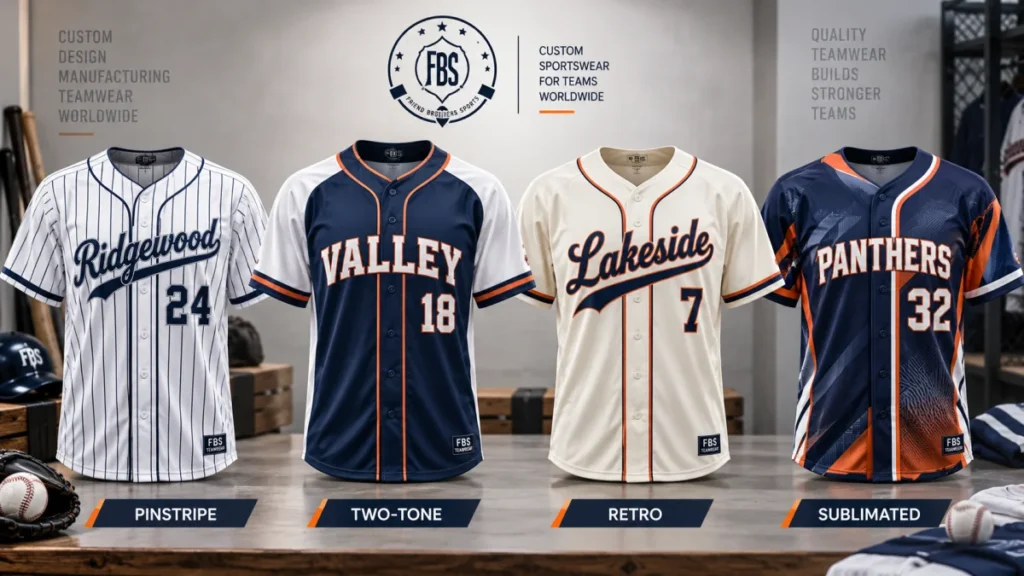
Pinstripes remain one of the most recognizable baseball uniform styles. Thin vertical lines can give a jersey a traditional, organized appearance while leaving enough space for a team name, chest logo, player number, and sleeve branding.
For a cleaner result, keep the stripe width and spacing consistent and make sure logos and numbers remain readable against the pattern. Teams can pair pinstripe jerseys with solid-colored baseball pants or caps to keep the full uniform balanced.
2. Clean Two-Tone Designs
A two-color jersey is a strong option for teams that want a modern look without excessive graphics. One color can form the base of the jersey while a contrasting second color appears on sleeves, collars, piping, side panels, numbers, or lettering.
This approach works especially well for schools, academies, clubs, and youth teams because it keeps the uniform easy to recognize and easier to coordinate with existing team branding.
3. Retro and Throwback Baseball Jerseys
Retro-inspired jerseys can use traditional script lettering, button-front styling, contrast piping, vintage number treatments, and restrained color combinations.
The key is to borrow the character of classic baseball uniforms without making the design difficult to reproduce or read. A modern performance fabric can still be used while maintaining a traditional visual direction.
4. Modern Sublimated Baseball Jerseys
Sublimation gives teams much more freedom with patterns, gradients, textures, color transitions, and integrated graphics. Because the artwork becomes part of the fabric, complex visual elements can be incorporated without relying entirely on separately applied decorations.
This can work particularly well for clubs and teams that want a distinctive identity or need sponsor graphics, numbers, names, and detailed artwork within one coordinated design.
Teams ready to move from inspiration to production can view our custom baseball jerseys for team, club, school, and bulk manufacturing requirements.
For additional visual inspiration, browse our baseball uniform design collection to explore different jersey and teamwear concepts before preparing your own design brief.
5. Gradient and Fade Designs
A controlled gradient can create a contemporary look without overwhelming the jersey. For example, a darker team color may gradually transition into a lighter shade toward the bottom of the jersey or sleeves.
Gradients work best when the team name, logo, and player numbers still have enough contrast to remain clearly visible. Avoid placing important lettering directly over highly detailed color transitions unless the design has been tested carefully.
6. Geometric Pattern Jerseys
Subtle geometric elements such as angled panels, repeating lines, diamonds, or abstract shapes can add energy to a uniform while preserving a professional appearance.
These patterns are usually most effective as supporting visual elements rather than the main focus. Keeping them tonal or slightly darker than the base color can help the team identity remain dominant.
7. Mascot-Focused Baseball Jerseys
Schools, academies, and youth clubs can build a jersey around a mascot or team symbol. The mascot may appear as a chest logo, sleeve mark, shoulder graphic, or subtle background element.
Avoid repeating a large mascot across too many parts of the uniform. One strong focal point combined with clean typography usually creates a more professional result.
8. Minimalist Baseball Jerseys
Not every team needs complex artwork. A simple jersey with a solid base color, clean wordmark, strong number style, and one accent color can look highly professional.
Minimalist designs also make it easier to coordinate jerseys with custom baseball pants and custom baseball caps.
9. Patterned or Camo-Inspired Jerseys
Pattern-based jerseys can work for tournaments, special events, club programs, or teams looking for a more distinctive visual identity.
If using camouflage, digital patterns, tonal textures, or abstract artwork, maintain enough open space around the team name and numbers. The graphic should support the uniform rather than reduce readability.
10. Tournament and Special-Event Jerseys
Teams sometimes need a separate jersey for tournaments, championships, charity games, commemorative events, or seasonal programs.
These jerseys can use alternative colors, special sleeve graphics, event references, or limited-edition patterns while maintaining recognizable elements from the team’s primary identity.
Youth Baseball Jersey Ideas
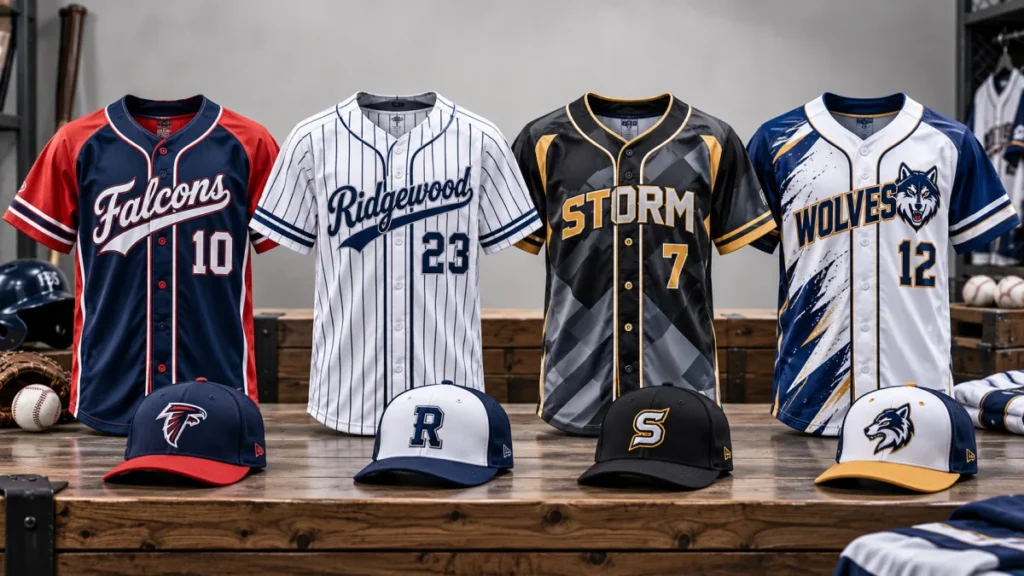
Youth baseball jersey ideas should balance visual appeal with simplicity and readability. Younger teams often benefit from bold colors, clear numbers, uncomplicated logos, and designs that remain recognizable from the stands and across the field.
Good youth baseball jersey directions include:
- Bold two-color combinations
- Classic team-name lettering
- Simple mascot graphics
- Contrast sleeves
- Modern sublimated side patterns
- Pinstripe designs
- Large, readable back numbers
- Matching caps and pants
Youth teams should also consider size ranges carefully. A design that looks balanced on an adult jersey may need adjustment when produced across smaller youth sizes. Logos, names, numbers, and sponsor graphics should remain proportionate throughout the size range.
How to Choose Colors for a Baseball Jersey
Color is one of the first things people notice about a uniform. Start with the team’s established colors whenever possible and build the jersey around one dominant color, one supporting color, and an optional accent.
Strong contrast is especially important for:
- Player numbers
- Team names
- Chest logos
- Player names
- Sponsor marks
For example, dark navy lettering on a medium blue jersey may not have enough separation. Adding a white or light-colored outline can improve visibility significantly.
Teams planning both home and away uniforms can maintain the same logo, typography, and design structure while reversing or adapting the dominant colors.
Choosing Fonts for Baseball Jerseys
Typography has a major influence on the personality of a baseball jersey. Traditional script fonts can create a classic baseball appearance, while block or varsity-style lettering often feels stronger and more contemporary.
Common directions include:
- Script fonts for traditional team names
- Block fonts for bold, easy-to-read numbers
- Varsity lettering for school and academy programs
- Custom wordmarks for clubs and branded team programs
Readability should take priority over decoration. Highly detailed fonts may become difficult to recognize when viewed from a distance or produced at smaller sizes.
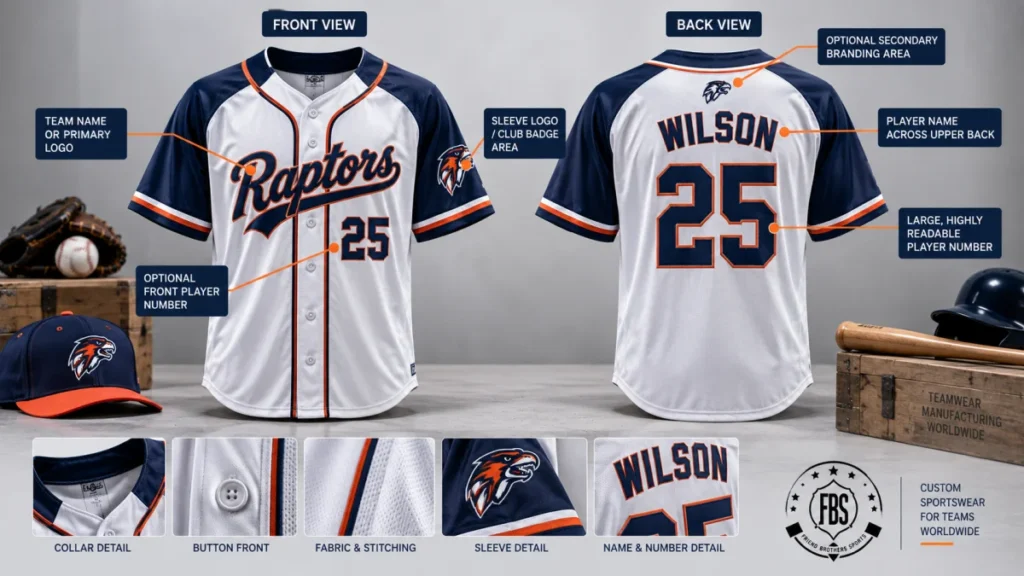
Logo, Player Name and Number Placement
A baseball jersey needs a clear visual hierarchy. The primary team identity should normally receive the most attention, followed by player information and secondary branding.
Typical placements include:
- Team name or logo across the chest
- Player number on the back
- Player name above the back number
- Smaller number on the front where required
- Club, league, sponsor, or flag graphics on sleeves
- Secondary branding around the upper back or shoulder area
Placement should be planned around seams, buttons, collars, and garment panels. This is particularly important for detailed logos and lettering that cross multiple construction areas.
Sublimation vs Embroidery for Baseball Jersey Designs
The right customization method depends on the visual style and intended finish of the jersey.
Sublimation
Sublimation is particularly useful for:
- Full-color graphics
- Gradients
- All-over patterns
- Complex sponsor artwork
- Integrated names and numbers
- Multi-color team designs
It provides considerable design freedom because artwork can be incorporated directly into the fabric surface.
Embroidery
Embroidery can work well for selected logos, badges, initials, and traditional branding elements where teams want a more raised or textured appearance.
However, embroidery is not the right solution for every large or highly detailed graphic. The design, jersey fabric, logo size, weight, and intended use should all be considered before choosing the method.
In some uniform programs, teams may combine different customization techniques depending on the jersey design and branding requirements.
Matching Baseball Jerseys With Pants and Caps
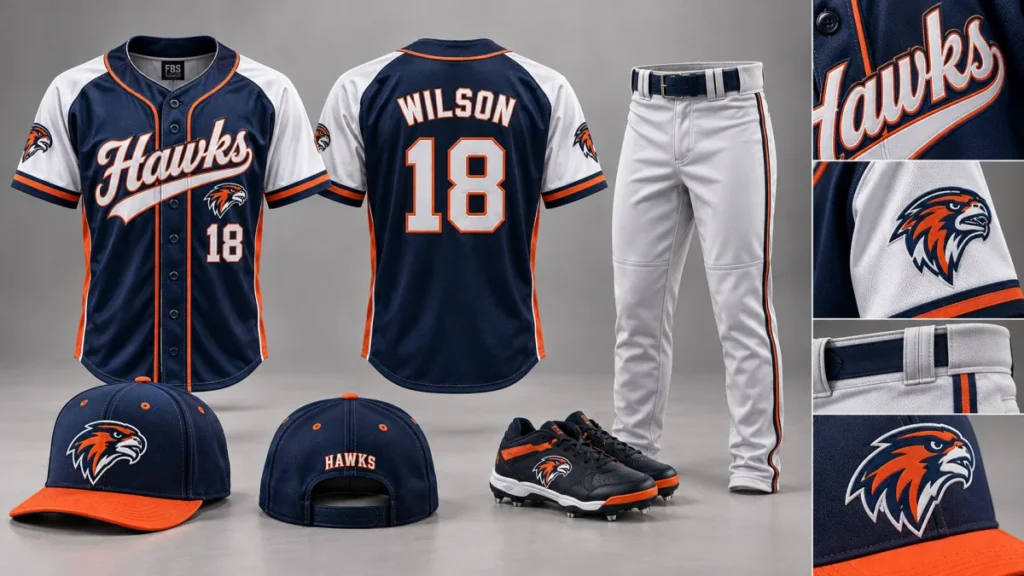
A baseball jersey should not be designed in isolation if the team plans to order a complete uniform.
Colors and design elements can be carried across:
- Baseball jerseys
- Baseball pants
- Baseball caps
- Training apparel
- Warm-up garments
For example, piping from the jersey can be repeated on the pants, while the cap can use the same primary logo and accent color.
Teams looking for coordinated jersey-and-pants options can also review the complete baseball uniform set.
Once your design direction is clear, the next step is choosing the right baseball jersey manufacturer that can reproduce the design consistently for your team.
From Baseball Jersey Idea to Bulk Production
Once a team has selected a design direction, the next stage is turning the concept into a production-ready uniform.
A typical process may include:
- Define the design brief: team colors, logos, jersey style, quantities, sizes, and intended use.
- Prepare artwork: provide logos, references, sponsor graphics, names, and number requirements.
- Select fabric: choose a material appropriate for performance, comfort, and the selected customization method.
- Confirm customization: determine whether the design uses sublimation, embroidery, or another suitable technique.
- Review the design: check artwork placement, colors, typography, and player details before production.
- Confirm sizing: prepare the team size breakdown for youth or adult players.
- Proceed with production: manufacture the approved uniforms according to the confirmed specifications.
For buyers who want to understand the broader workflow, see the FBS custom sportswear manufacturing process.
Common Baseball Jersey Design Mistakes
Even strong design ideas can lose impact when too many elements are added at once. Before approving a jersey, check for these common problems.
Using Too Many Colors
A large color palette can make the jersey difficult to coordinate and may weaken the team’s visual identity. A controlled palette is usually easier to recognize.
Poor Number Contrast
Player numbers should remain readable from a distance. Avoid using number colors that blend into the jersey background or detailed patterns.
Using Too Many Fonts
A different font for the team name, player name, numbers, sponsors, and sleeves can make the uniform look disconnected. Limit typography to a small coordinated system.
Overloading the Jersey With Graphics
Logos, patterns, sponsor graphics, stripes, gradients, mascots, and numbers all compete for attention. Establish a visual hierarchy instead of making every element equally dominant.
Ignoring the Production Method
A design should be planned with the intended customization technique in mind. Highly detailed artwork may require a different production approach than a simple embroidered badge.
Designing Only the Front
A complete jersey should be reviewed from the front, back, sides, and sleeves. Player names, numbers, sponsor placements, seams, and secondary graphics all affect the final appearance.
How Teams Can Prepare a Better Baseball Jersey Design Brief
You don’t need finished production artwork before contacting a manufacturer. But providing a clear brief can make the design and quotation process much easier.
Useful information includes:
- Team or organization name
- Team logo
- Primary and secondary colors
- Reference jersey designs
- Preferred jersey style
- Player names and numbers if required
- Sponsor logos
- Youth and adult size requirements
- Estimated quantity
- Matching pants or caps requirements
- Shipping destination
If you’re planning uniforms for a team, club, academy, school, distributor, or sportswear program, this information gives the manufacturer a clearer starting point for design and production planning.
Baseball Jersey Design Ideas FAQ
What are good baseball jersey ideas for a team?
Good options include classic pinstripes, two-tone jerseys, retro designs, sublimated patterns, minimalist uniforms, gradients, mascot-based designs, and coordinated tournament jerseys. The best choice depends on your team identity, colors, age group, and intended use.
What are some good youth baseball jersey ideas?
Youth teams can use bold team colors, simple mascot logos, contrast sleeves, clear player numbers, pinstripes, or controlled sublimated patterns. Designs should remain readable and adaptable across smaller jersey sizes.
What colors work best for baseball jerseys?
There is no single best color combination. Teams should normally begin with their established brand or club colors and make sure the team name, logo, and player numbers have enough contrast against the base jersey.
What fonts work well for baseball jerseys?
Script, block, varsity, and custom wordmark styles can all work well. Choose typography that fits the team’s identity while remaining easy to read on the field.
Are sublimated baseball jerseys suitable for complex designs?
Yes. Sublimation is well suited to gradients, patterns, full-color artwork, integrated names and numbers, and other detailed designs. The exact method should still be selected according to the fabric and uniform requirements.
Can a baseball jersey design match the pants and cap?
Yes. Colors, piping, logos, patterns, and accent details can be coordinated across jerseys, pants, and caps to create a consistent complete uniform.
What information should a team provide before requesting custom baseball jerseys?
Teams should ideally provide their logo, colors, design references, estimated quantity, size breakdown, player names and numbers where applicable, customization requirements, and shipping destination.
Turn Your Baseball Jersey Idea Into a Custom Team Uniform
A strong baseball jersey starts with a clear idea, but the final result also depends on fabric selection, artwork preparation, customization method, sizing, and production planning.
Friend Brothers Sports manufactures custom baseball uniforms for teams, clubs, schools, academies, distributors, and sportswear businesses. Whether you already have finished artwork or only a design reference, you can share your requirements for production review.